India’s Energy Security, Domestic Solar Manufacturing.
Domestic Solar Manufacturing is becoming increasingly important to India’s clean energy transition and long-term energy security. With large solar parks across sunny Indian states like Rajasthan and Gujarat, and many homes installing rooftop panels as part of government incentives, solar energy is now the backbone of India’s Renewable growth. The country targets a capacity of 500 GW of clean, renewable energy by 2030.
However, constructing giant solar parks is only one part of the puzzle. For several years, the country has been heavily importing its solar panels and components from abroad.
This brings us to a crucial question: Can India truly be energy-independent when the source of power generation comes from outside?
To protect its power supply and support local industries, India is focusing towards the manufacturing of its own solar hardware. We will understand how solar cells/modules work, what the ALMM-2 list is, and why local solar manufacturing is a critical factor for India’s energy security.
Solar Module vs Solar Cell: The Key Difference
Often people use ‘solar panel’ and ‘solar cell’ as if they are the same thing; however, there are distinct differences between the two in their manufacturing and applications:
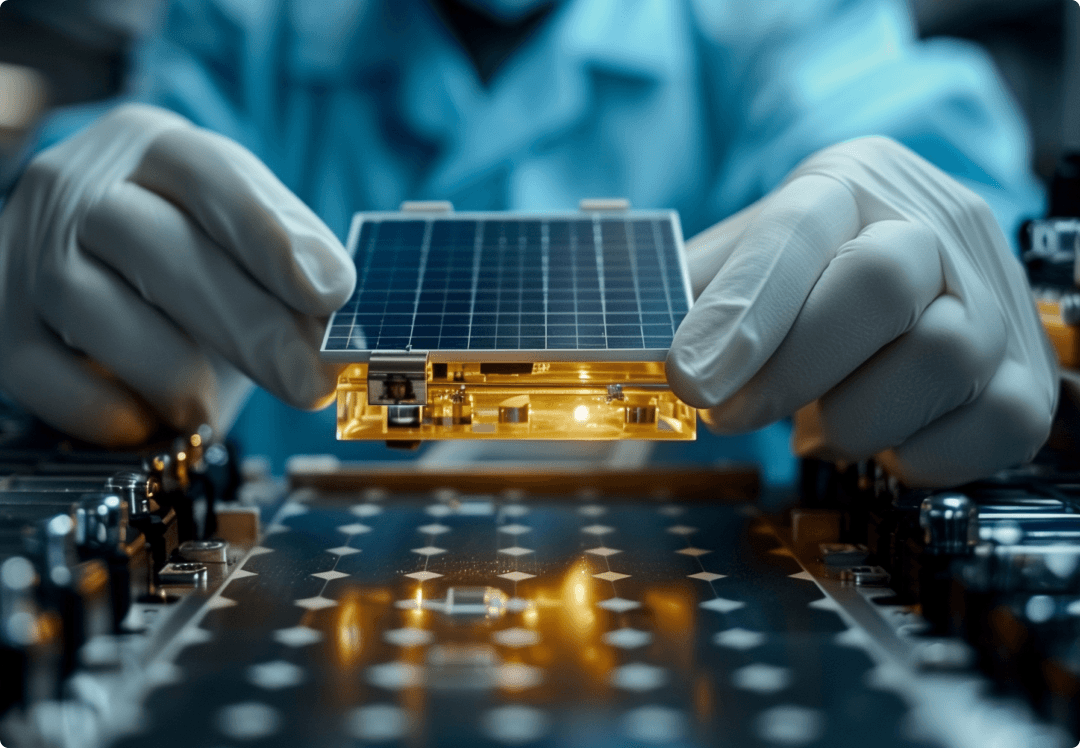
Solar Cell: The small, thin slice of treated silicon wafer inside the panel. It is the real heart of the Solar Module system that catches sunlight and turns it into electric current.
Solar Module: This is the finished, framed photovoltaic unit known as the solar panel. Each solar module consists of multiple interconnected solar cells held together and covered with protective toughened glass, waterproof backsheets made of plastic, and a metallic frame for structural support.
For a long time, India focused mainly on assembling the outer panels. Local factories imported ready-made cells from abroad, soldered them together, and framed them. The capability existed to assemble panels, but true energy security rested upon Indian capabilities of creating what forms the core of the solar panel-the solar cell.
Why Local Solar Manufacturing Is India’s Energy Security?
Where historically national energy security focused solely on adequate coal and crude oil reserves, today, with the rising demand and common use of electricity to power EVERYTHING from bullet trains to IT servers, the meaning of energy security now extends to domestic manufacturing capacity and control over our entire supply chain for solar technologies.
Avoid Supply Disruptions and Factory Delays
Any closure of a factory abroad, labour strike there, or trade dispute with a supplying nation has the potential to grind Indian energy projects to a halt overnight. Having manufacturing locally means power stations will be commissioned on time, and local installation companies will be assured supply for projects.
Shield Against Volatile Prices
International shipping charges, the prices of raw materials, and even currencies fluctuate wildly. Importing solar panels can make the total system cost unpredictable and unmanageable in light of such uncontrollable global factors. Indian manufacturing localizes these cost fluctuations and ensures prices for installers, customers and businesses are more stable.
Keep Money and Jobs inside India
Globally, the international energy hardware industry makes billions of dollars annually through Indian demand for equipment. Locally manufacturing solar cells and panels helps keep that foreign currency inside India and supports local employment within the industrial sector, contributing to the national economy and stimulating local engineering prowess.
Safeguard the National Grid
Every solar plant connects to India’s main electrical network with complex smart electronic boxes called inverters as well as sophisticated digital monitoring systems. Having control over these components and their source means India has inherent power grid security against external interference and digital threats.
The Policy Catalyst: Understanding the ALMM-2 List
To encourage companies to set up factories in India, the Ministry of New and Renewable Energy (MNRE) created the Approved List of Models and Manufacturers (ALMM).
Policy | What It Covers | What it Means |
| ALMM List 1 | Finished Solar Modules/Panels | Government-backed projects must use approved, certified solar panels. |
| ALMM List 2 | Individual Solar Cell | Panel makers must use cells from certified domestic cell factories. |
ALMM List-1 Under the initial rules (List-I), companies could assemble panels in India using imported cells and still sell them to government projects.
ALMM-2 List Individual Solar Cells. Panel manufacturers must source certified, Domestic Content Requirement individual cells (DCR Cells) from local cell manufacturers for all products under this scheme to be saleable to government projects.
While ALMM-1 made it mandatory to purchase pre-fabricated solar panel that already passed government regulations, ALMM-2 specifically dictates that the actual solar cells in the panels can be no other than Indian, giving a clear indication of steady demand for local solar cells, thereby directly influencing the willingness and financial capacity of investors to expand their cellular manufacturing operations significantly.
The Value of Indian DCR Cells
The concept of DCR or Domestic Content Requirement cells is another important policy driving India’s self-reliance in this sector. Several government solar schemes, ranging from farmers’ solar water pumps (PM KUSUM) to household rooftop solar units (PM Surya Ghar), mandates that the solar cells and modules both be made in India.
What is valuable about Indian DCR cells is that they deliver three fundamental benefits:
Better Efficiency and Advanced Technology
Indian manufacturers are invested in building factories and research facilities to cater to needs with highly advanced cell designs like TOPCon, which are more efficient compared to other standard modules available in the market. This simply means more electricity from the same square footage of the rooftop.
Quality Tracking and Traceability
Since every single Indian DCR cell manufactured in the country comes with a Unique Serial Number and a Digital Mark, a system for thorough tracking, and checking of quality ensures complete assurance for the buyer of their source and quality.
Reduced Overall System Cost
Indian cells, with their efficiency and cost-effectiveness deliver substantial amounts of electricity that require much less rooftop space, meaning reduced wiring, fewer supporting structures needed and less overhead.
Future Indian Manufacturing Steps
Under a favourable government policy environment and robust tax structure, India’s solar manufacturing capability is soaring. What’s next? India needs to plug the gaps with locally produced and sourced solar hardware that go even further up the supply chain:
Production of Silicon Wafers
Silicon wafers are what we then carve cells from. Since these wafers are currently imported, building out wafer manufacturing capability locally is the immediate next focus for India.
Enhancement of Complementary/Supporting Industries
Solar modules and cells require solar specific glass, protective solar back-sheets and aluminum frames. Local capacity needs to build up across all these ancillary components to ensure absolute supply chain security.
The way Forward
India’s quest to lead clean energy is also its push towards national autonomy. Through consistent implementation of schemes like ALMM-2 and pushing for Indian DCR Cells, backed by local solar cell manufacturing capacity, India is ensuring that its clean energy ambitions are well shielded from external global volatility and external supply challenges, making sure the lights stay on brightly.
How Celloraa Energy is Contributing?
Celloraa Energy is contributing to India’s energy security by strengthening domestic solar cell manufacturing capabilities with advanced TOPCon technology. By producing high-quality, Made-in-India solar cells, Celloraa is helping reduce dependence on imported solar cells and build a more resilient domestic solar supply chain. With its focus on advanced technology and future-ready manufacturing, Celloraa is supporting India’s vision of a self-reliant and globally competitive solar energy ecosystem.
Celloraa Energy Private Limited.
Surat, Gujarat, India