India’s Renewable Energy Revolution
What did India accomplish in its renewable energy development?
India has crossed a significant clean-energy milestone, securing 300.50 GW electricity capacity from non-fossil fuel sources by 31 July 2026. This achievement marks over 60% completion of India’s target to have 500 GW of electricity capacity from alternative energy sources by 2030.
What does this milestone mean for the solar industry?
India’s clean-energy milestone creates immense opportunities for solar companies, solar cell manufacturers, solar module makers, EPCs, investors, and policymakers. India’s electricity generation capacity now stands at 552 GW, of which over 54% is non-fossil fuel-based. The market is set to witness a paradigm shift as solar energy becomes the preferred choice of electricity generation for developers, corporate buyers, and even residential consumers.
Why solar energy is the backbone of India’s green growth?
Solar energy provides India with a credible opportunity to transition to clean and sustainable growth. India’s solar potential is enormous, and solar electricity generation capacity constitutes over 50% of non-fossil fuel electricity in India. Renewables added a record 55.29 GW of non-fossil electricity generation capacity during FY25-26, of which 44.6 GW was solar and 6 GW was wind energy. Hence, solar energy is at the forefront of India’s renewable energy revolution.
How does solar manufacturing benefit India’s renewable energy revolution?
India’s solar manufacturing landscape offers significant advantages to local manufacturers. A solar cell manufacturer offers its clients photovoltaics (PV) that convert solar energy into electricity. Therefore, solar cell efficiency directly impacts the electricity generation output of a solar module. As solar developers, corporate buyers, and even residential consumers look to extract higher yields from the same rooftop area, solar cell efficiency has emerged as a critical differentiator.
Why is domestic solar cell manufacturing witnessing a boom in India?
India is witnessing a boom in domestic solar cell manufacturing, aiming to reduce dependence on foreign suppliers and bolster its energy security. The emphasis on achieving energy independence has catalysed the push for domestic solar cell manufacturing in India. With the Approved List of Models and Manufacturers for solar PV modules crossing 200 GW as of 2024, up from 2.3 GW in 2014, India demonstrates its commitment to self-reliance and reducing vulnerabilities in the global supply chain. Hence, solar cell manufacturers can benefit massively from this burgeoning domestic demand for solar cells.
What are the key attributes of a reliable solar cell manufacturer for a customer?
A reliable manufacturer offering competitive pricing, coupled with assured quality and after-sales service, is more likely to capture a share of this growing market. For a solar cell manufacturer, the focus should be on automating manufacturing processes, research and development, workforce optimisation, and quality control. A manufacturer offering dependable and cost-effective solar cells is likely to win over developers, EPCs, and corporate buyers.
What is a TOPCon solar cell, and why is it a critical enabler of India’s renewable energy revolution?
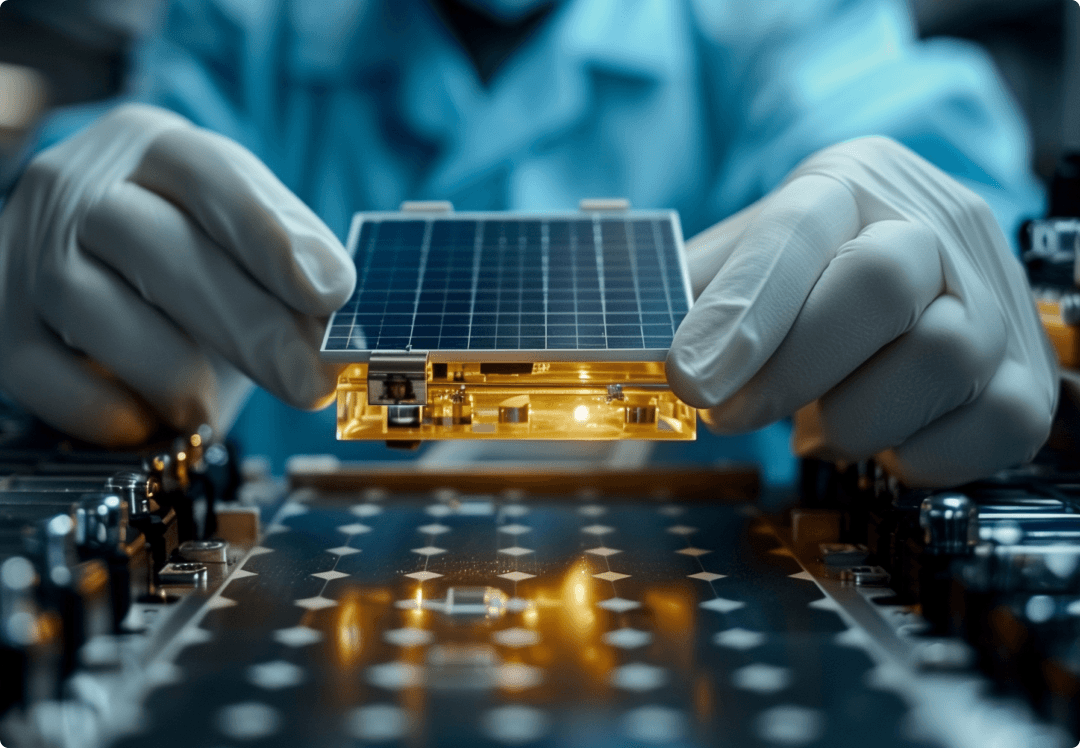
The solar energy industry is witnessing intense R&D activity to produce solar cells with higher efficiency. While the introduction of PERC cells made solar electricity an economically viable proposition, N-type cells have raised the bar even higher. TOPCon solar cells, in particular, offer superior efficiency and have gained widespread attention in recent months for their potential to transform solar energy. A TOPCon solar cell, which stands for TUnnel Oxide Passivated Contact, promises to deliver higher power output by minimising energy losses due to recombination of electrons and holes.
How are TOPCon solar cells manufactured?
TOPCon solar cells are high-performance solar cells produced by carefully controlled manufacturing processes. TOPCon cell manufacturers employ various approaches to produce cells with high efficiency. The manufacturers use high-quality silicon wafers and subject them to precision cleaning and texturing before applying a diffusion process. This is followed by the formation of thin oxide and doped polysilicon layers, anti-reflective coating, metal contact printing, and rigorous performance testing to meet stringent quality standards. Therefore, manufacturers adopting advanced TOPCon manufacturing technologies can produce solar cells with higher yields and reduced degradation rates.
How are customer preferences shifting towards advanced solar cells?
The residential, commercial, and utility sectors are witnessing a heightened emphasis on value-based purchasing. Rooftop solar users, for instance, are looking to maximise electricity generation from the available solar area to lower electricity bills. Developers and project buyers, meanwhile, seek faster payback periods, requiring higher electricity generation per installed peak capacity. Additionally, as land prices rise, solar developers are under constant pressure to extract maximum value from the solar project. Consequently, customers are demonstrating a distinct preference for cutting-edge solar cells, such as TOPCon, bifacial, and N-type cells, capable of delivering higher yields.
What does India’s renewable electricity generation mix comprise?
India’s renewable electricity generation mix comprises solar, wind, hydro, bio-power, and nuclear energy. As of 31 July 2026, India’s total non-fossil electricity generation capacity from solar, wind, hydro, bio-power, and nuclear sources amounts to 300.50 GW, of which solar contributes the lion’s share of 164.59 GW. Wind power follows at 58.14 GW, with hydro at 57.24 GW, bio-power at 11.75 GW, and nuclear at 8.78 GW. A diverse electricity generation mix underpins energy security, and India’s renewable electricity generation mix is critical to securing energy security while facilitating the transition to net-zero emissions by 2050.
How has India’s renewable electricity generation evolved over the years?
India’s renewable electricity generation has recorded unprecedented growth, rising from 190.96 billion units (BU) in 2014-15 to 477.79 BU in 2025-26. Thus, India has witnessed a phenomenal increase in renewable electricity generation capacity and electricity generation in absolute terms. For the solar industry, this is a critical point, as there is an enormous opportunity to provide reliable project design, execution, operation and maintenance (O&M), and high-efficiency solar cells with enhanced performance characteristics.
What opportunities does India’s renewable energy revolution present for green energy companies?
India’s renewable energy revolution creates myriad opportunities for green energy companies, ranging from project developers to EPCs, O&M providers, and manufacturers. The country’s rooftop solar market alone is projected to register exponential growth as residential, commercial, and industrial consumers look to mitigate high electricity tariffs. Hence, manufacturers, distributors, and solar component suppliers can benefit massively by focusing on the residential and commercial solar markets. With solar electricity generation capacity skyrocketing from 2.8 GW in 2014 to 164.59 GW in 2026, solar cell manufacturers can leverage India’s burgeoning domestic demand for solar cells and target overseas markets as global buyers look to diversify their sources of supply.
How can solar energy contribute to industrial decarbonisation?
Industrial decarbonisation is fast becoming a critical growth area for the solar industry. Industrial consumers, including warehouses, textile mills, chemical works, data centres, and commercial developments, are under relentless pressure to reduce carbon emissions and adopt renewable energy. A reliable solar cell supplier can play a critical role in supporting industrial decarbonisation by providing cutting-edge solar cell technology, reliable service, and documentation, while a competent manufacturer can differentiate itself through higher efficiency solar cells and enduring performance attributes.
Why are Indians and small businesses turning to rooftop solar?
Many Indians are turning to rooftop solar to insulate themselves from high and fluctuating electricity tariffs. Rooftop solar users benefit massively from the availability of improved financing options, net metering, and various government subsidies, making the residential sector a consistent electricity consumer. Therefore, a manufacturer offering knowledge and guidance on solar cell efficiency, inverters, warranty claims, and solar cell maintenance is more likely to strengthen its footprint in the residential solar market.
What headwinds could derail India’s renewable energy revolution?
India’s renewable energy revolution is not without its challenges, including the need for upstream integration, evolving technologies, and financing. If India fails to integrate vertically in polysilicon, ingot, and wafer manufacturing, India’s solar cell manufacturers may find themselves at the mercy of global pricing and supply dynamics. At the same time, rapid technological advancements could render existing manufacturing facilities obsolete, particularly for manufacturers that fail to invest in advanced technologies and processes. Finally, India’s solar industry requires robust financing to fund manufacturing expansion, which demands stable demand and long-term offtake contracts. Similarly, grid infrastructure must also evolve to accommodate the intermittent nature of solar electricity generation.
Why should financing and grid readiness be a priority for India’s solar industry?
Financing will be a critical enabler of India’s solar industry, given the massive capital expenditure involved in setting up manufacturing facilities. At the same time, grid readiness will be paramount as solar electricity generation grows exponentially in the coming years. Solar electricity generation follows a daily cycle, with generation peaking during daytime and tapering off in the evenings and at night. Consequently, India needs to invest heavily in grid infrastructure, demand forecasting, flexible generation, and storage to balance electricity generation and consumption, particularly as India’s renewable electricity generation capacity approaches 500 GW.
Why is quality a critical success factor for solar cell manufacturers?
Quality is a critical success factor for solar cell manufacturers as buyers are growing increasingly discerning, evaluating a manufacturer’s credentials, warranty claims, module degradation rates, and bankability before finalising a purchase. Hence, a manufacturer cannot take its product quality for granted and must strive to enhance product performance, reliability, and service to remain relevant and profitable in the long run.
What lies ahead for India’s solar future?
The next phase of India’s solar future will see a consolidation of manufacturers offering superior product quality, features, and performance. Solar cell manufacturers must invest heavily in improving manufacturing capabilities, downstream sales, and service infrastructure while also enhancing research and development (R&D) capabilities. EPCs must strive to design solar projects that maximise electricity generation while also considering the solar cell manufacturing technologies deployed at the project site. Finally, policymakers must promote domestic manufacturing while also encouraging healthy competition among manufacturers to ensure continued quality improvements, technological innovations, and enhanced service capabilities.
Why should businesses consider solar to be a strategic investment?
Solar is a strategic investment for businesses and corporations in India, as it helps reduce long-term operating costs while also positioning the company as a socially responsible organisation committed to sustainability. For a solar cell manufacturer, India offers an extraordinary opportunity to capture a large share of the domestic solar cell market while also targeting overseas markets. Hence, solar manufacturing is not only a means for a business to diversify its portfolio but also to play a meaningful role in India’s net-zero mission.